ServicesWell Water Treatment
Well Water Treatment in Deer Park
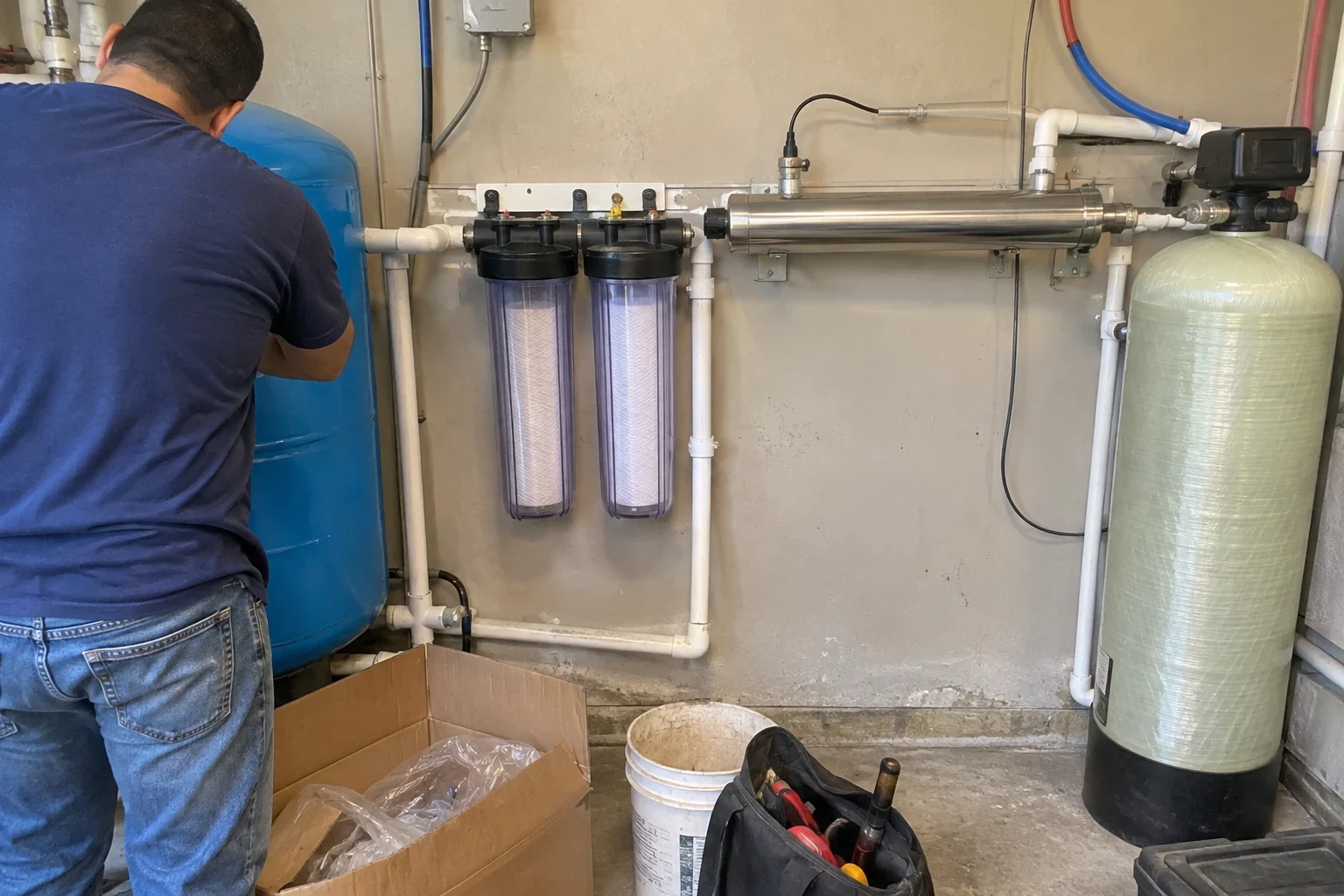
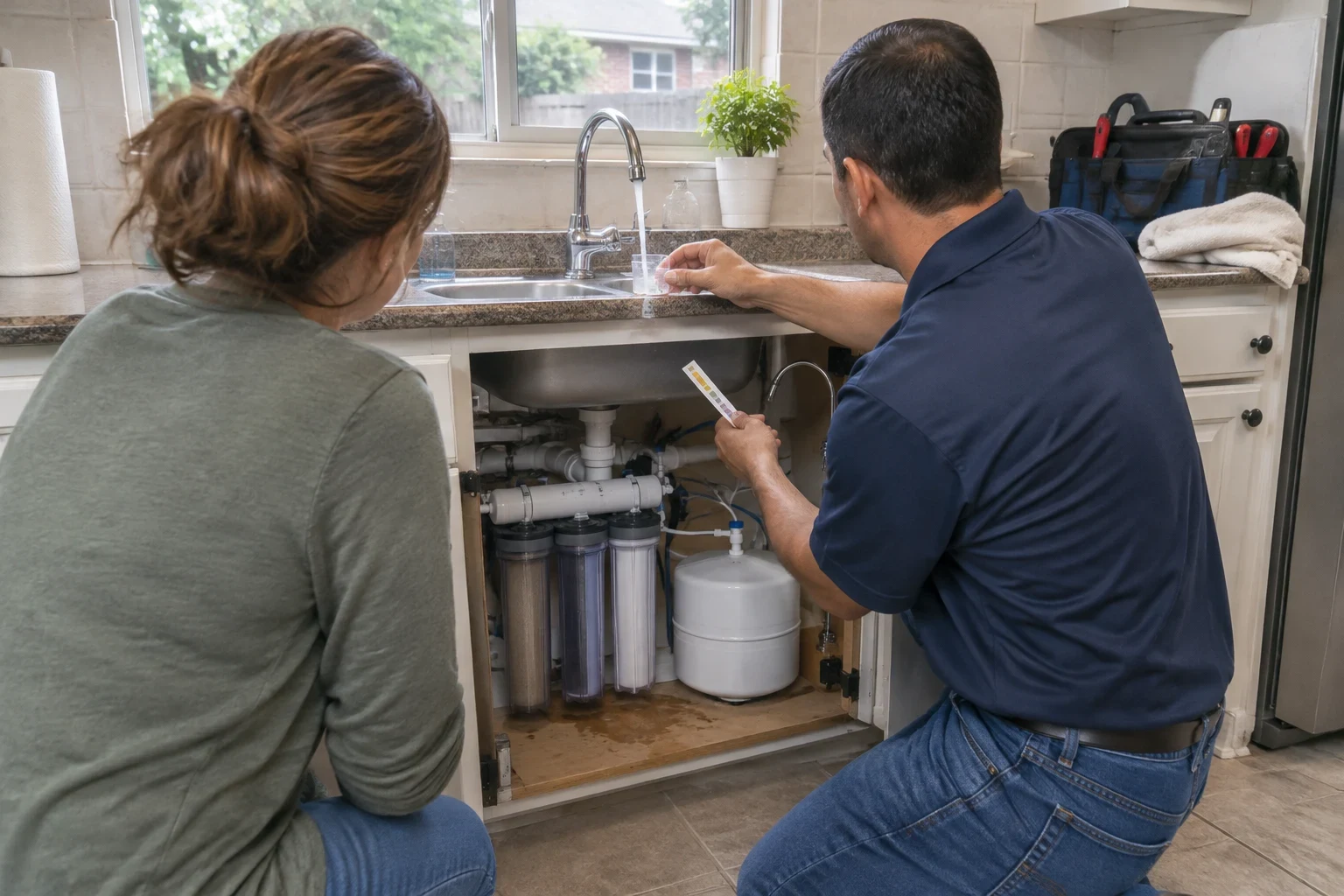
A private well makes you the water utility for your home. We start by testing what comes out of your well and looking over your pump, pressure tank and plumbing. Then we explain the results plainly and recommend only the treatment your water needs.
Treatment That Starts With Your Well's Own Results
Every well is different, even two on the same road. One may carry dissolved iron that turns orange in the toilet tank. The next may smell like rotten eggs from hydrogen sulfide, or pull in fine sand after heavy rain. A filter that fixes one problem can do nothing for another, so guessing wastes your money.
That is why we inspect and test first. We have been in business 13 years, and our work is guided by Certified Water Specialist training from the Water Quality Association. You get the findings in plain language, a clear recommendation and a written quote before anything is installed. If your water only needs one piece of equipment, that is all we suggest.
What Well Water Treatment Includes
- Well water test
- We measure iron, manganese, hardness, pH, sulfur and sediment, and we can send samples to a lab for bacteria. The full list of tests is on our Water Testing page.
- A look at your well equipment
- We record your pump, pressure tank, flow rate and pipe sizes. If treatment can't match your well's flow, the shower pressure suffers, so this step matters.
- Iron and sulfur removal
- For metallic stains and odor, an oxidizing filter is our usual choice. It turns dissolved iron and sulfur into solid particles, traps them and flushes them out during backwash.
- Sediment filtration
- A sediment stage stops sand and grit before they wear on fixtures, your water heater or the rest of the treatment equipment.
- UV disinfection when needed
- When a test shows bacteria, a UV unit treats the water as it flows past, with no chemicals added. If the results don't call for it, we leave it out.
- Installation and ongoing care
- Free installation comes with your system. Full services after the sale keep it running, from filter changes and settings checks to periodic retesting.
Signs Your Well Water Needs Treatment
Rust-colored staining
Orange or brown marks around drains, tubs and toilet bowls are a classic iron sign. White laundry can turn dull or streaky too.
Rotten egg smell
A sulfur odor that gets worse with hot water is a frequent well complaint. Sometimes it comes from the water, sometimes from a reaction in the water heater, and a test sorts out which.
Cloudy or gritty water
Grit collecting in faucet aerators, or a glass that stays hazy after sitting, means sediment is slipping through.
Black specks or slime
Dark spots or a slippery coating inside the toilet tank can point to manganese or iron bacteria.
No test in the last year
Bacteria and nitrates can't be tasted or smelled. If your well hasn't been checked since a flood or a big storm, a test is a sensible step.
How Your Well Water Visit Works
- 1
Start with a phone call
Describe the problem and when you first spotted it. If you know your well's age or depth, share that too, since it helps us plan the visit.
- 2
Inspection and testing at your home
We draw samples, run on-site tests and check your well equipment and plumbing. Any bacteria samples are sent to a lab.
- 3
Plain findings and a written quote
We go over every result with you, explain what it means for your home and point to the treatment that fits. The written quote is yours to review on your own schedule.
- 4
Installation
We put the system in, set it for your water and flow, and cover your floors as we go. Before leaving, we show you how it runs and clean up the work area.
What Affects the Cost of Well Water Treatment
We can't price a well system until we know what is in your water. Two homes with the same complaint can need very different equipment. After testing, your written quote lists each piece and what it does.
- What the test finds
- Iron alone is simpler to treat than iron plus sulfur, manganese and bacteria. Each problem may need its own stage.
- How much is in the water
- Higher iron or sulfur levels call for larger tanks or stronger oxidizing methods.
- Your well's flow rate
- Equipment has to be sized to your pump's output and your household's use so pressure stays steady.
- Space and plumbing
- Where equipment can go, near the pressure tank or in a garage, and how much repiping is needed both play a part.
Well Water Treatment Questions
Something not covered here? (281) 982-4153
Do I need to test before buying a well system?
Yes. Without a test, you're guessing at the cause of stains, smell or cloudiness. Testing tells us what is in your water and how much, so the equipment actually solves the problem. It also keeps you from paying for stages you don't need.
Will a water softener fix iron in my well?
A softener can remove small amounts of iron, but heavy iron or iron bacteria will clog it over time. Many wells do better with an iron filter, sometimes followed by a softener if hardness is also high. Our Water Softeners page explains when a softener makes sense.
Is my well water safe to drink?
We can't say until it's tested. Bacteria and nitrates can be present with no taste, smell or color. We can arrange lab testing, and if bacteria show up, UV disinfection is a common fix. Many families also add reverse osmosis at the kitchen sink for drinking water.
How much upkeep does a well treatment system need?
Most systems need a sediment filter change every few months and an occasional check of settings and backwash cycles. UV lamps are replaced on a set schedule. We provide full services after the sale, so you can lean on us for that upkeep.
Will treatment lower my water pressure?
Not when the system is sized correctly. We measure your well's flow rate during the inspection and choose equipment that keeps up with it.
Find Out What's in Your Well
Describe the stains, smell or cloudiness you've been living with, and we'll pick a time to come out, sample your water and look over your well setup. You hear our honest findings before we recommend a thing.