ServicesWater Testing
Water Testing in Deer Park
Before you buy a filter or softener, it helps to know what your water actually contains. We test the water at your tap, walk you through each result in plain words and tell you honestly whether you need treatment at all.
Know what is in your water first
A lot of people start shopping for equipment because of a smell, a stain or a neighbor's advice. The trouble is that spotty glasses, a chlorine taste and an orange ring in the toilet each point to something different, and each has a different fix. Testing tells us which problem you have, so you are not paying to solve one you don't.
We have been in business 13 years, and our approach has stayed the same: look carefully, share what we find, then talk options. Sometimes the answer is a single filter at the kitchen sink. Sometimes it is a whole-home system. Sometimes your water is fine and we will say so.
What a water test covers
Hardness
Hardness is the amount of dissolved calcium and magnesium, the minerals behind crusty faucets and buildup in your water heater. Your reading tells us whether a water softener is worth it for your home or would add little.
Iron and staining minerals
Rust-colored marks on sinks, tubs and laundry usually come from iron or manganese. We check those levels so any treatment media can be matched to them.
Chlorine and taste
City water is disinfected, which keeps it safe but can leave a pool-like taste and smell. We measure chlorine so you know whether carbon filtration would make a difference.
pH and dissolved solids
Low pH water can be hard on copper pipes, and high dissolved solids can affect taste and coffee. These readings fill in the rest of the picture.
Well water checks
If your home is on a private well, we focus on what matters most there, including iron, sulfur odor and whether a lab test for bacteria is worth doing.
A plain-language review
You get each number next to what it means. We point out what is normal, what is worth keeping an eye on and what may need attention.
Signs it is time to test your water
Spots and crusty buildup
White film on glass shower doors, faucets that crust over and dishes that come out cloudy all suggest mineral content worth measuring.
Stains that keep coming back
Orange, brown or black marks in toilets and on laundry often mean iron or manganese. Scrubbing treats the stain, not the cause.
A smell or taste you notice
A chlorine bite, a rotten-egg odor from hot water or a metallic taste are all clues. Each one points to a different source.
An older home or new-to-you house
Older plumbing can add metals to water after it leaves the main line. If you just moved in, a test gives you a baseline.
You are on a private well
Well owners are responsible for their own water quality, and conditions can shift with the seasons. Regular testing keeps you informed.
How a testing visit works
- 1
A conversation on the phone
You tell us what you are noticing and what worries you. We ask a few questions about your home, your water source and any equipment already in place.
- 2
We test at your tap
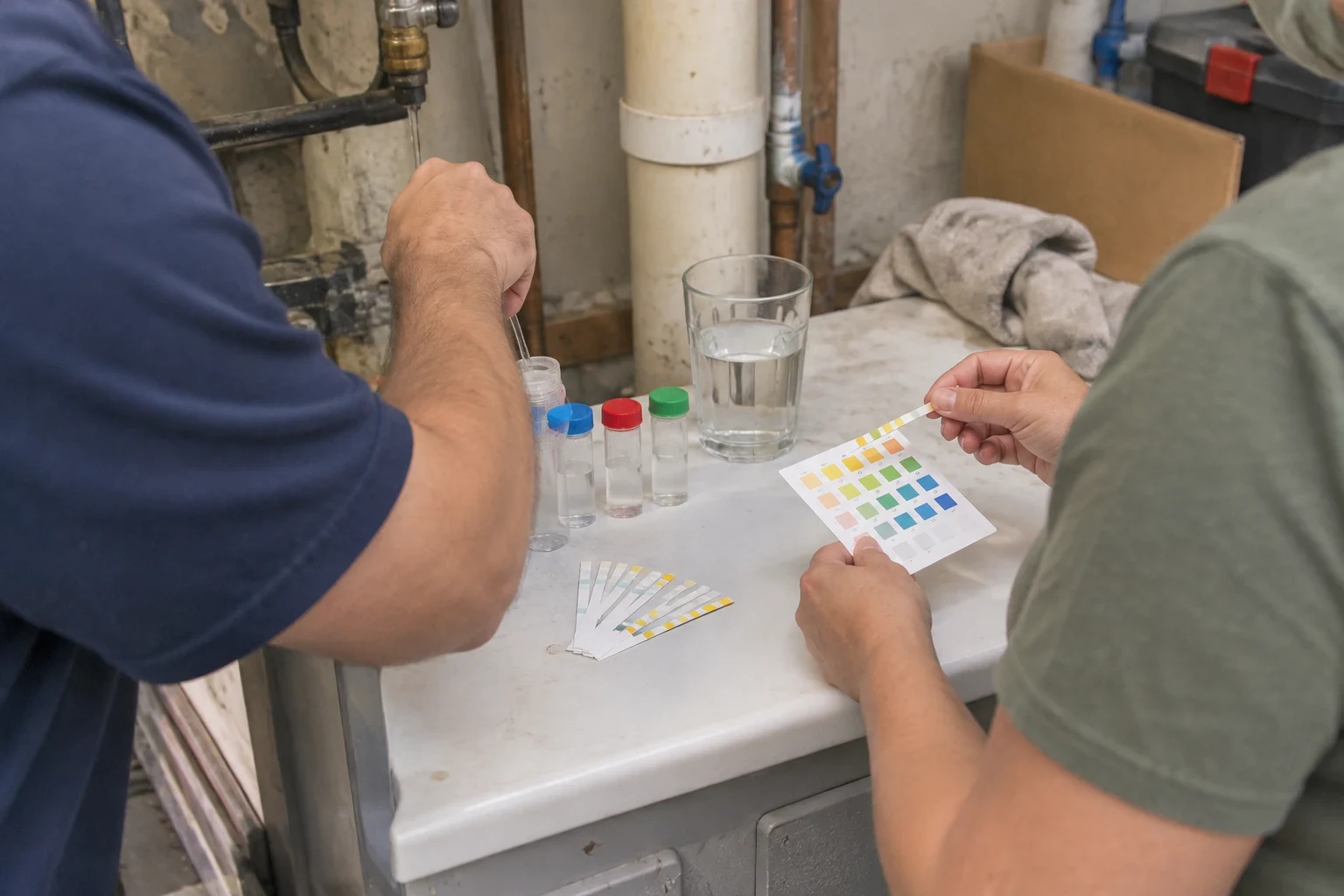
At the visit, we draw samples from the right faucets, usually the kitchen and a point before any existing filter. Most readings are done right there while you watch.
- 3
We explain what we found
We sit down with you and go through each result. No jargon, no pressure, just what the numbers say about your water.
- 4
Honest options, if any
If something needs treatment, we explain which system fits and why, whether that is reverse osmosis, a softener or whole-home filtration. If nothing does, that is the answer you get.
What affects the cost of water testing
The price depends on how much we need to check and where your water comes from. A city-water home with one concern is a lighter job than a well with several questions. On the phone, we will explain what your test involves and what it costs before anything goes on the calendar.
- City water or private well
- Well water usually needs a broader set of checks, because no utility treats it before it reaches your home.
- How many things we check
- A quick hardness and chlorine reading is simpler than a full panel that adds iron, pH, dissolved solids and odor sources.
- Outside lab work
- Some questions, like bacteria or lead from older plumbing, are best answered by an outside lab. That adds a step and a cost, and we will tell you when it is worth it.
- Equipment already in place
- If you have a filter or softener now, we may sample the water going in and coming out of it. Comparing the two shows whether that system is still earning its keep.
Water testing questions
Something not covered here? (281) 982-4153
Is my city water already safe to drink?
Public water in the Deer Park area is treated and regularly tested by the utility. What reaches your glass can still pick up things from your home's pipes, and it may have a taste or hardness you don't like. Our test looks at the water as it leaves your faucet, not at the treatment plant.
Who does the testing?
Our team includes a Certified Water Specialist through the Water Quality Association. That training covers reading water results and matching them to the right treatment, which is the whole reason we test first.
Am I going to get a sales pitch once the results are in?
No. You get the readings and an honest view of whether anything would help. If your water looks good, we say that and stop there. When we do suggest something, the reason is tied to a number on your results that you can see for yourself.
How often should a well be tested?
Many well owners test once a year, and again any time the taste, smell or color changes. After heavy rain or flooding it makes sense to check sooner, since surface water can find its way into a well.
What happens if I do need treatment?
We walk you through the options that fit your results and what each one costs. Installation is free on the systems we sell, and we offer full services after the sale, so the people who tested your water stay with you afterward.
Get clear answers about your water
Let us know what you have been noticing at the tap, in the shower or on your fixtures, and we will arrange a test at your home. You will see the readings and hear plainly what they mean for your family.