ServicesReverse Osmosis
Reverse Osmosis in Deer Park
If you want cleaner water for drinking and cooking, reverse osmosis is the most thorough option for one tap. Before we suggest anything, we read your water, check the pressure and look under your sink. Then we tell you plainly whether RO fits.
What Reverse Osmosis Does for Your Home
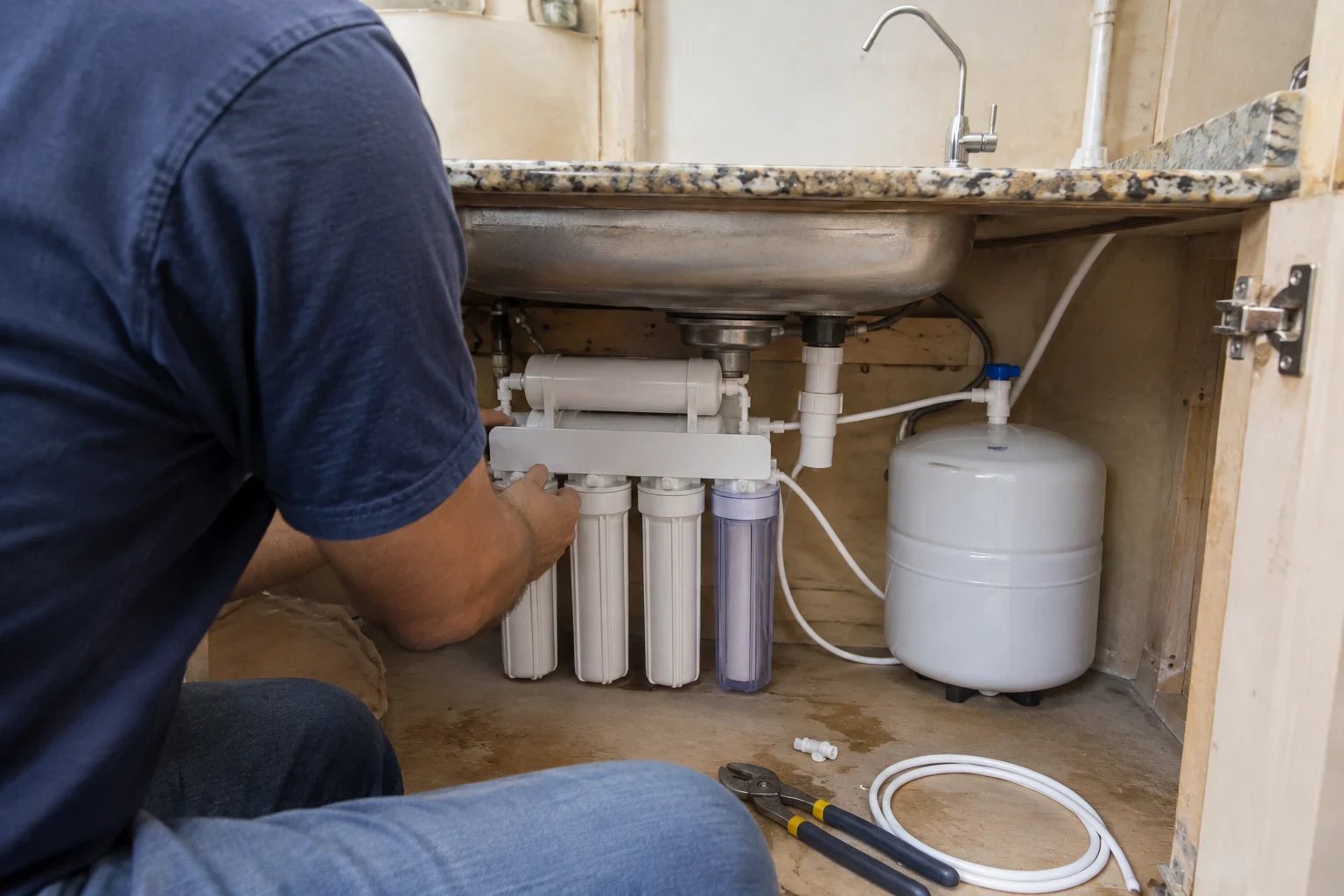
Reverse osmosis forces water through an extremely fine membrane that stops most dissolved solids. That covers things a simple carbon filter can let through, like lead from older plumbing, nitrates, fluoride and extra salts. The unit tucks into the cabinet below your kitchen sink and supplies a separate faucet of its own. Your drinking and cooking water gets treated, and every other tap in your home runs just as it does now.
RO makes sense when your worry is the water you drink. If what bugs you is a chlorine smell in the shower or spots on every fixture, whole-home filtration or a water softener may fit better, and we will tell you that. Every visit starts with a reading of your water, so what we recommend comes from your results, not from whatever we happen to have in stock.
What Comes With an RO Install
- A reading of your tap water
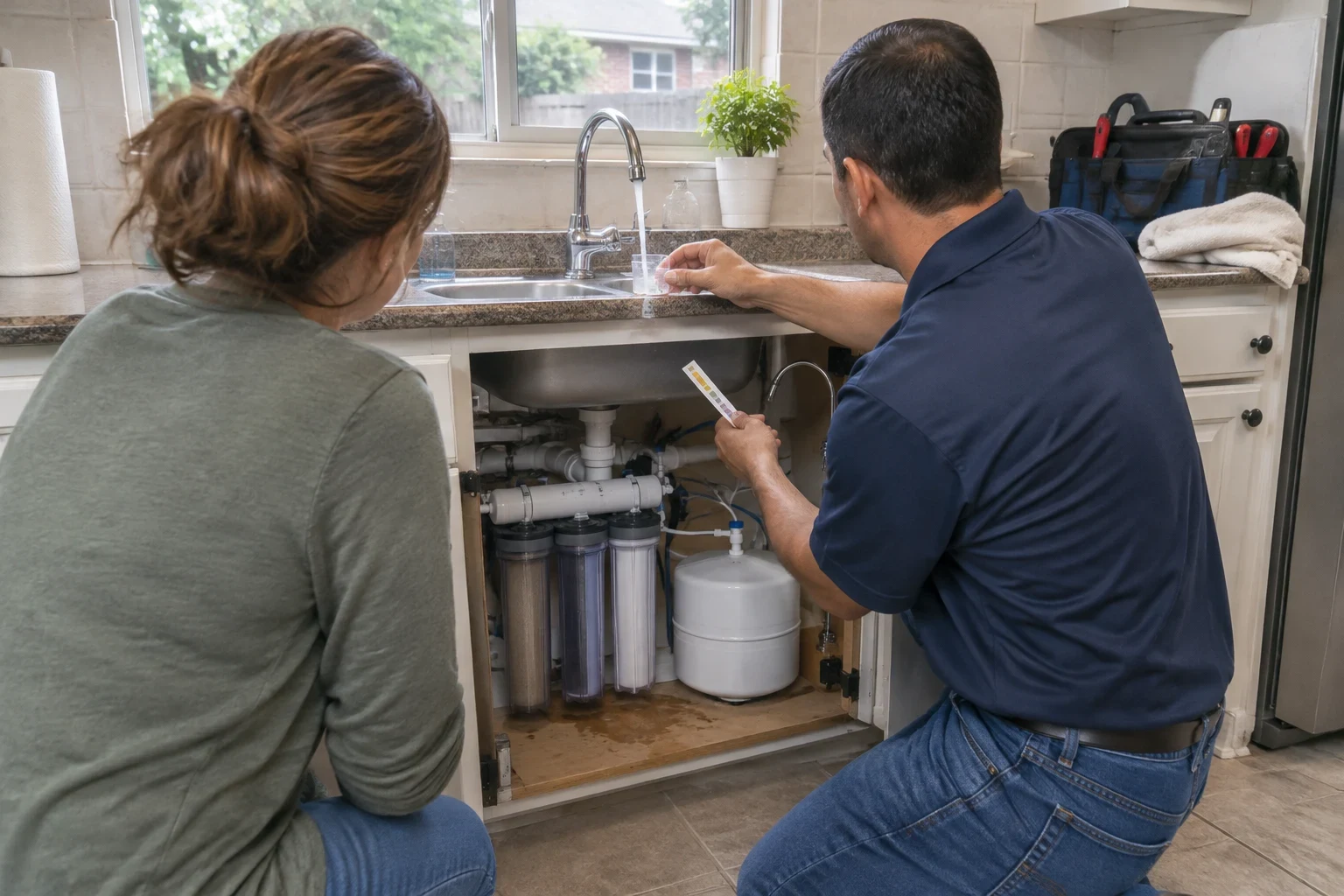
- Before we order anything, we measure total dissolved solids and check the incoming pressure. You see the results right alongside us. For a deeper look first, our water testing service goes further.
- Staged filtration, not just a membrane
- A sediment prefilter catches grit, and a carbon prefilter takes out chlorine before it can wear on the membrane. A final carbon polishing filter sharpens the taste just before water reaches your faucet.
- Storage tank and dedicated faucet
- A compact pressurized tank holds treated water so it is ready when you want it. The separate faucet goes on your sink deck or countertop, and we arrange both to save as much cabinet space as possible.
- A proper drain connection
- While it works, RO sends concentrate to the drain. We tie it in with a drain saddle or an air gap faucet so dirty water has no path back into the system.
- Optional refrigerator hookup
- When the fridge sits within reach of the sink, we can also route treated water to its dispenser and ice maker.
Signs RO Could Be Right for You
You buy bottled water every week
Cases of water add up in cost and in trash. A dedicated tap gives you the same use without the hauling.
Your home has older plumbing
Lead can enter water from old solder and fixtures inside the house, not from the supply. RO is one of the few point-of-use options that reduces it well.
Coffee, tea or ice tastes off
A flat, salty or chemical note in drinks often points to dissolved solids that a pitcher filter does not touch.
A high reading on a test
If a lab test or our meter shows high dissolved solids, nitrates or other contaminants you care about, RO deals with them right at the tap you drink from.
You want extra assurance
Some families simply want the cleanest water they can get for a new baby or someone with health concerns. That is a fair reason, and we will walk you through what RO does and does not remove.
What Shapes the Price of an RO System
Installation is free with us, so most of your price comes from the system you choose and what your kitchen needs. After the inspection we go over the numbers with you line by line, so the final bill holds no surprises.
How many stages you choose
A standard four or five stage system sits at the lower end. Adding a remineralization or UV stage raises the price. If you like the idea of putting minerals back in for taste, we can compare that option with our alkaline water systems.
Pressure at your kitchen line
An RO membrane filters best when water reaches it with enough push behind it. In homes where the incoming pressure is on the weak side, a small booster pump can refill the tank faster and cut how much water heads to the drain.
Counter material and faucet mounting
Many sinks already have an open hole for the RO faucet. Granite, quartz or other stone that needs a new hole takes extra time and a careful hand.
Additional lines
Running treated water to your refrigerator or a second sink means more tubing, more fittings and more time on the job.
How Your RO Job Goes
- 1
Start with a phone call
Let us know what concerns you about your water and a little about your kitchen setup. We pick a time that works for you to come take a look.
- 2
Inspection and plain findings
We test the water, check pressure, and look at the cold line, drain and cabinet space. You get a straight answer on whether RO makes sense, and what size system, before you commit to anything.
- 3
Install day
We put down a mat, empty the cabinet, mount the filters and tank, drill for the faucet if needed and connect the drain. Most installs wrap up in a few hours, and your kitchen water stays on for most of that time.
- 4
Flush, check and show you
We flush the new filters, check every fitting for leaks and take a reading of the treated water so you can compare it to the tap. Then we show you how filter changes work and clean up before we leave.
Reverse Osmosis Questions We Hear
How much water goes to the drain with an RO system?
A share of the incoming water carries away what the membrane holds back, which is how the membrane keeps itself clear. How much depends on the model and on the pressure feeding it. Current units running at healthy pressure send far less to the drain than systems from years past. We check your pressure on the first visit and tell you whether a booster pump or a more efficient model is worth it.
Is it a problem that RO removes minerals?
Most of the minerals you take in come from food, not from your water. Even so, some people find RO water tastes a little flat. A remineralization stage adds back a small amount of calcium and magnesium, and we can let you taste both before you decide.
How often do the filters need changing?
The prefilters and the polishing filter are usually replaced about once a year. The membrane lasts a few years, depending on what is in your water. We offer full services after the sale, so you are never left to sort out filter changes on your own.
Can I put RO in if I already have a softener?
Yes. The two work well together, and softened water is easier on the membrane. We look over the equipment you already have and plumb the RO so it runs alongside it.
Who will be looking at my water?
We have been in business 13 years, and our team includes a Certified Water Specialist through the Water Quality Association. That training guides how we read your water and size the right system for your home.
See What Your Kitchen Tap Needs
We serve Deer Park and nearby towns like Pasadena and La Porte. Give us a ring and we will set up a visit to test your water and look under your sink before recommending anything.