ServicesWater Softeners
Water Softeners in Deer Park
Chalky spots on glasses, crusty showerheads and soap that never seems to rinse off usually point to hard water. We test your water first, show you the hardness number, and recommend a softener only when it makes sense for your home.
A softener fixes hardness, and only hardness
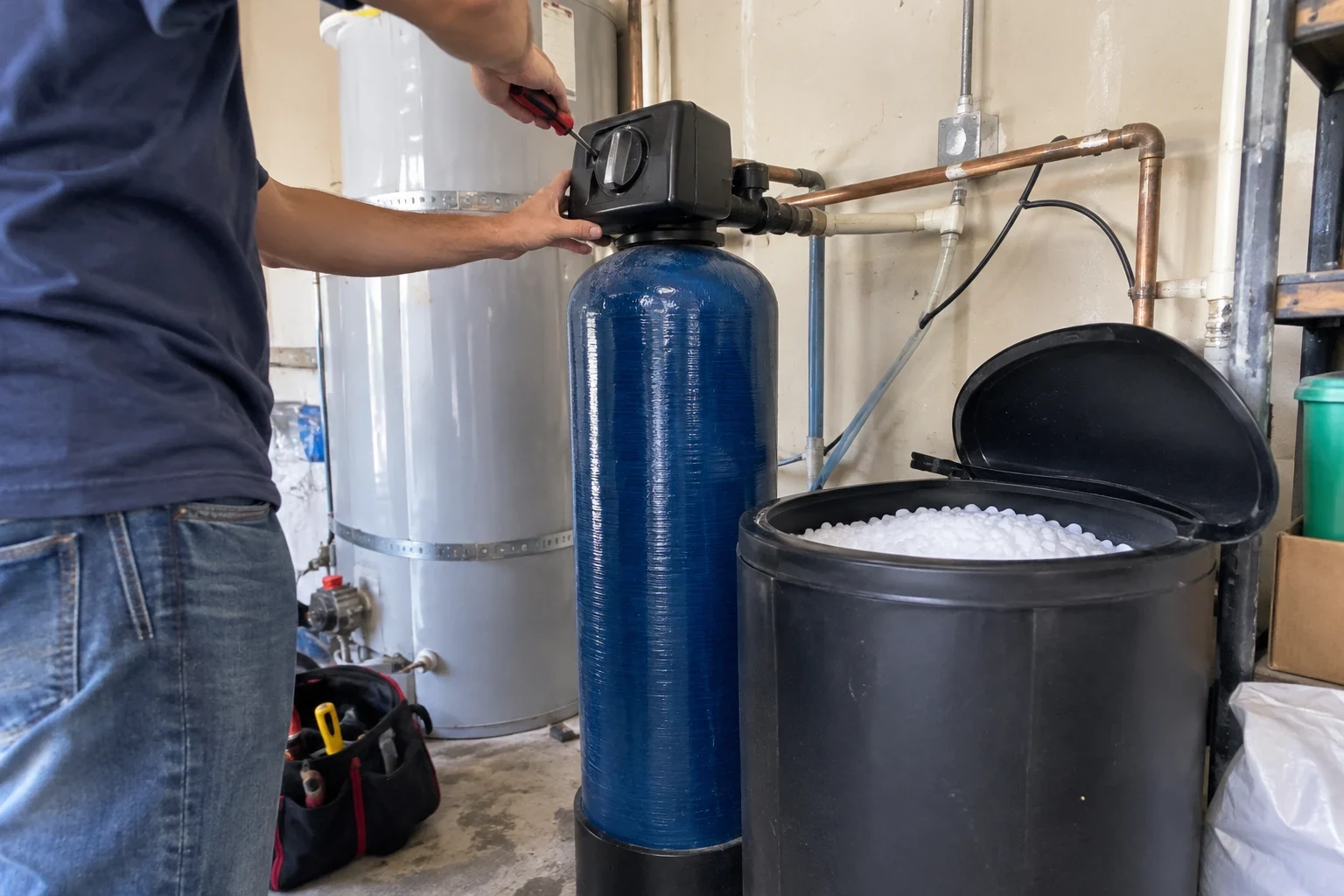
A softener sends your water through a tank filled with resin beads. As it passes, the beads hold on to the calcium and magnesium that make water hard and trade in a small amount of sodium or potassium. Once those minerals are out, scale stops building up in your water heater, faucets and appliances, and soap lathers the way it should. A softener does nothing for chlorine taste, odors or most other contaminants, though. Those need different equipment.
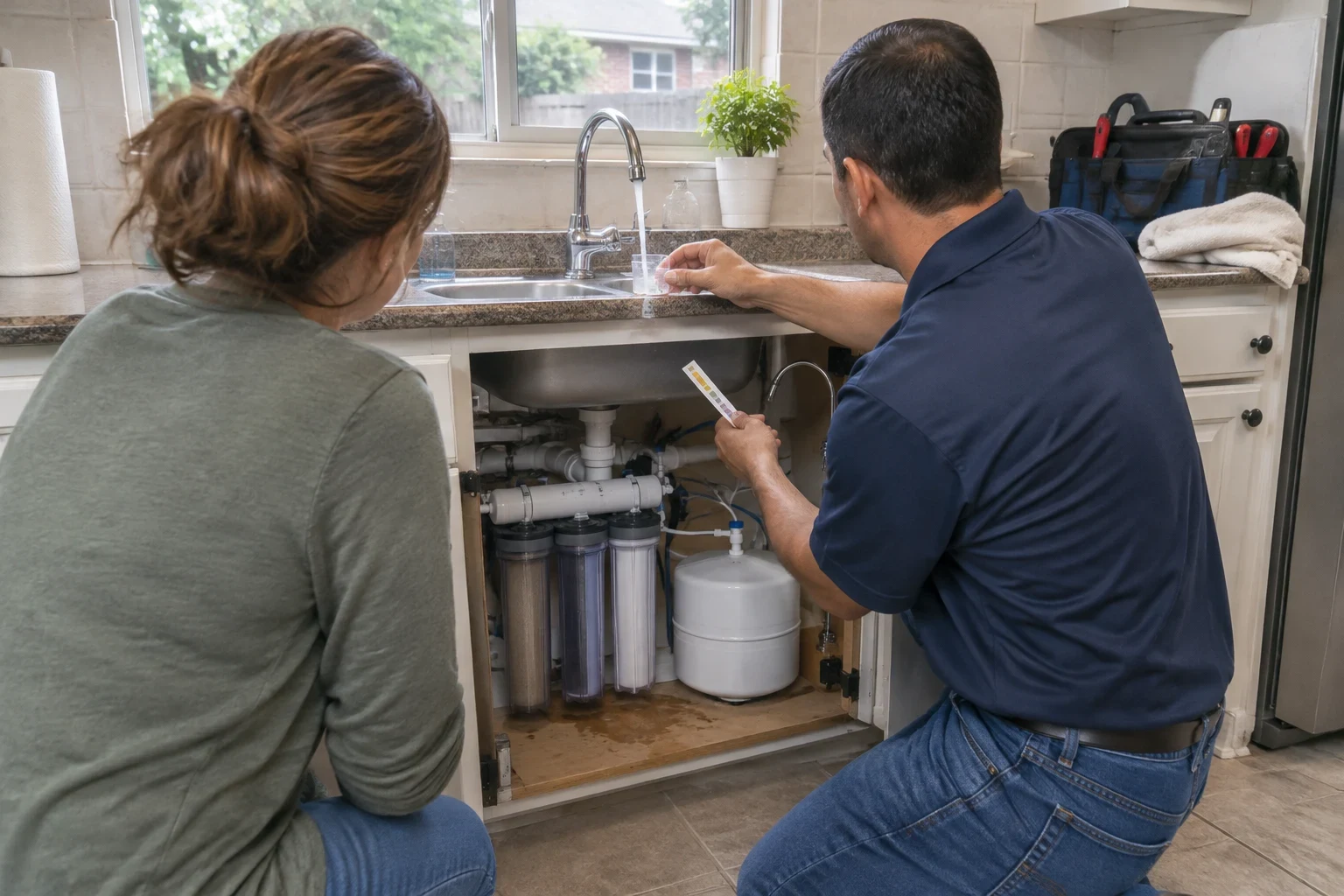
That is why every softener visit starts with measuring your real hardness level and checking for iron. We sit down with you at the kitchen counter and walk through the numbers. If your water is only a little hard, we will tell you so, and if a whole-home filter or a reverse osmosis system would solve the thing that is actually bothering you, that is what we will suggest.
We have been in business 13 years, and the person testing your water is a Certified Water Specialist through the Water Quality Association. That training is how we interpret a hardness reading and size a system to fit, instead of guessing.
What a softener installation includes
- Hardness and iron test
- Our first step is reading your hardness level in grains per gallon and looking for iron, since untreated iron can coat the resin and wear it out early. Together, those two numbers show whether a softener fits your home and how big it should be.
- Sizing to your household
- We match grain capacity to your hardness reading and the number of people in your home. Too small a unit regenerates over and over and burns through salt; too large a unit costs more than you need to spend.
- Metered control valve
- We program the valve to regenerate according to the water you actually use rather than a set schedule. That keeps salt and rinse water in line with your home's real demand.
- Bypass valve and drain line
- Each system comes with a bypass, which lets you route water around the softener while the rest of the house keeps running. We also run the drain line to a proper spot for the regeneration rinse.
- Free installation
- There is no charge to install. We set the tanks, make the connections, check every joint for leaks and clean up before we go.
- Full services after the sale
- Our help continues after install day. If you have questions about salt, valve settings or how the water is performing, give us a call and we will work through it with you.
Signs your home may have hard water
White crust on fixtures
Chalky buildup around faucets, showerheads and drains is calcium that stays behind when water evaporates.
Spotty dishes and glassware
A cloudy film on glasses fresh from the dishwasher is one of the most common hardness clues.
Soap that will not lather
Hardness minerals react with soap, so shampoo and dish soap barely foam and leave a sticky film on skin and tubs.
Water heater noise
Popping or rumbling sounds usually mean mineral scale has collected at the base of the tank. The heater then has to work harder to bring the same water up to temperature.
Stiff laundry
Scratchy towels and colors that fade too soon can come from minerals lodged in the fabric.
How a softener job goes
- 1
Phone conversation
You describe what you are noticing and tell us how many people live in your home. Then we pick a time to come out and test.
- 2
Testing and plain findings
We test right at the tap and walk you through the hardness and iron readings in everyday terms. Then we tell you honestly whether a softener will pay off in your home or not.
- 3
Recommendation you can review
If a softener fits, we go over the size, valve and salt options with you before anything is ordered. You can take your time deciding.
- 4
Install day
We choose the best location near your main line, set the tanks, bypass and drain, program the valve and run a test regeneration. Most installs take part of a day, and your water is off only for the short time we tie in.
- 5
Follow-up
Before we leave, you learn how to refill the brine tank and switch the bypass on and off. Later we check in to confirm your water is testing soft.
What moves the price of a softener
Installation is free, so your price mostly depends on the equipment your water calls for and any extra parts your plumbing needs. We share the full figure by phone or at the visit, once testing is done, so nothing gets tacked on later.
- Hardness and household size
- A higher grains-per-gallon reading and a bigger family both raise the grain capacity you need. That points to a larger resin tank.
- Iron in the water
- If the test picks up iron, the system may need iron-rated resin or a pre-filter so the softener holds up over the years.
- Plumbing at the install spot
- A home with an existing softener loop is a straightforward tie-in. Without one, we may need extra fittings and pipe to reach the main line and a drain.
- Valve and salt choices
- A metered valve costs a little more at the start and uses less salt as time goes on. Choosing potassium chloride over sodium salt affects what you spend on refills, not the price of the system.
Water softener questions
Something not covered here? (281) 982-4153
How do I know if I really need a softener?
The hardness test answers that. If your reading is low, a softener will not make much difference and we will say so plainly. If it is high enough to leave scale, a softener will protect your fixtures and water heater.
Will softened water taste salty?
At typical hardness levels, most people cannot taste any salt. If you would like less added sodium in what you drink, a reverse osmosis system under the kitchen sink removes it, or you can fill the brine tank with potassium chloride instead.
Does a softener remove chlorine taste?
No. A softener only deals with hardness minerals. Whole-home filtration is the right tool for chlorine taste and odor, and plenty of homes use the two together.
What maintenance does a softener take?
The main chore is topping off the brine tank with salt, usually every few weeks depending on how much water your home uses. Once in a while the salt can harden into a crust called a salt bridge, and we will show you what it looks like and how to break it loose.
I have a private well. Is a softener enough?
Well water often brings iron, sediment or odors that a softener on its own will not fix. We would begin with water testing and look at well water treatment, so the softener stays protected and all of the water gets treated.
Find out what your water is really doing
Pick up the phone, describe the spots, crust or dry skin you have been dealing with, and we will find a time to test. You see honest numbers before we suggest anything.